Guide
Build a distribution engine: the ultimate marketing guide for founders
This guide is how sophisticated founders build a distribution engine when creation is cheap, attention is short and buyers are careful with every dollar. It is written for people building real companies who already can ship and need a repeatable way to get customers. Another content calendar will leave you busy and under-learned. What you need is a clear market, a clear differentiator, a map of where those buyers actually show up, a short list of playbooks and tools sized to budget and team, then real campaigns with dates and kill criteria.
The sequence matters. Lock target market and differentiation first. Map where you can actually reach them. Choose playbooks next, then tools, then run campaigns. Marketing is campaign-based. Running organic alone or ads alone is incomplete. Sometimes one well-chosen playbook and one campaign moves the needle. Choose by budget and team size. Creation got cheap for everyone at once; distribution is the moat that still compounds.
You will walk out with five company choices that shape everything downstream, an eight-step marketing process that ends in test-and-kill, a playbook menu with five defaults for early B2B and specialist companies, and a one-sitting challenge that names your channels, campaigns and budget. I run Guide IQ and Storyline Pros on this map. The same map works if you are still tightening the offer, or later and trying to stop improvising growth every week.
01
What changed for founders
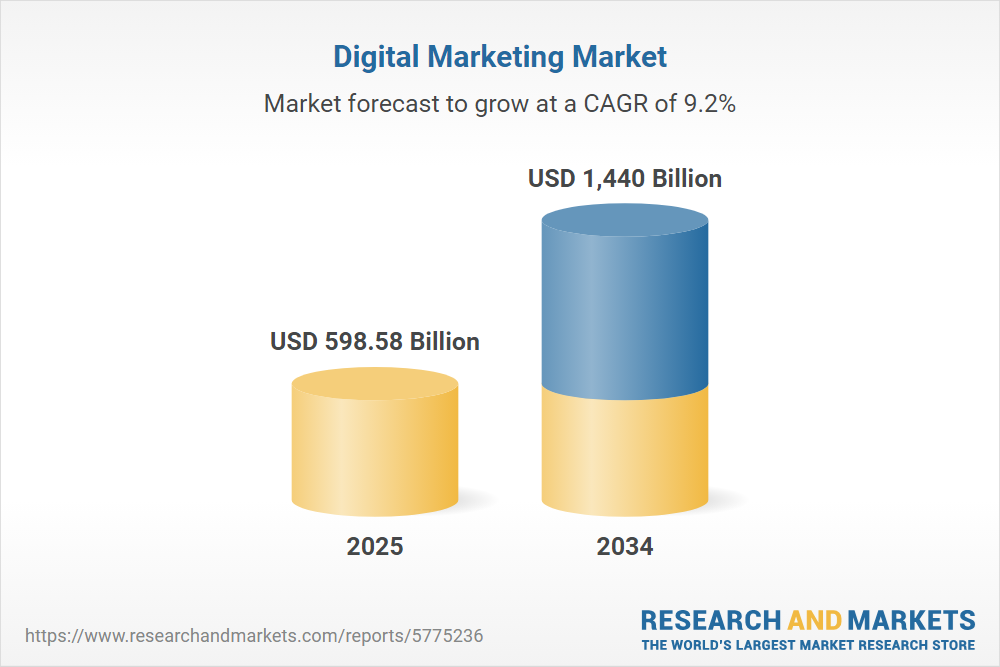
Speed of creation moved first. What used to take a team months can be done in a day. Pages, ads, products and content all got cheaper to produce. Your competitors have the same tools. Software used to be hard to copy. Features move in days. A working engine of content, partnerships, paid learning, email and founder voice does not.
Distribution is the final moat because the rest of the stack commoditized. If you cannot get found, product quality barely matters in the market. Founders keep building more product as a substitute for distribution because building feels like progress. That usually delays the real work: naming the market, locking the story and running campaigns you can measure.

02
The attention environment
People sit inside an onslaught of digital media. Industry estimates put daily content exposure around 5,000 pieces, up from about 1,400 in 2012. Those figures are directional, not a census. Nobody is starving for more posts.
DataReportal counted 5.79 billion social media user identities in April 2026, about 69.9% of the world (global overview). Identities, not unique humans. Plenty of people run more than one account. The feed is full either way.
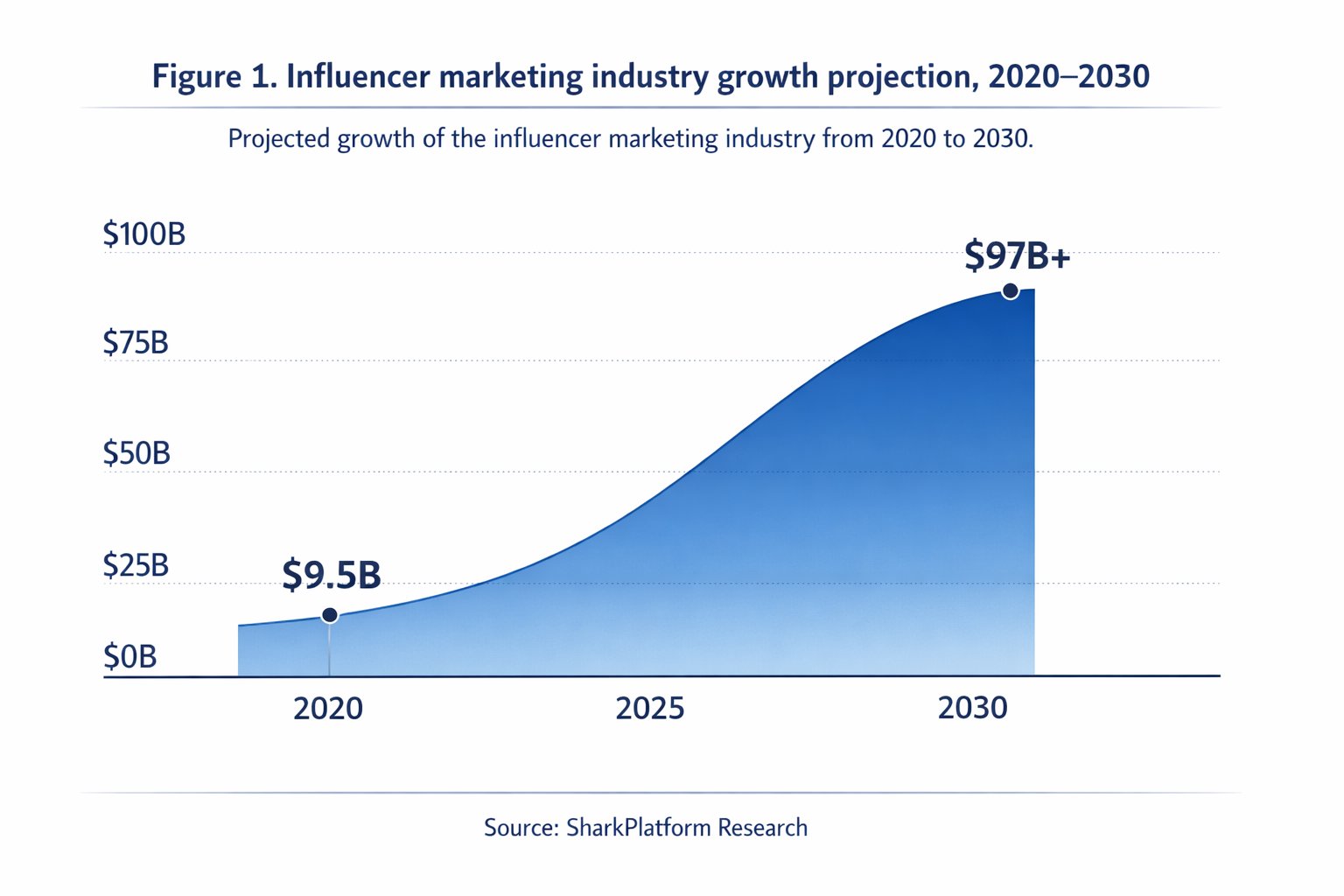
The Influencer Marketing Hub Benchmark Report 2025 put the influencer marketing industry at about $32.55 billion in 2025, up from about $24 billion in 2024. MIDiA forecasts global creators to reach 1.1 billion by 2032, a 76% rise. You are competing with everyone who can hit record.
The feed trained people to skim. Asurion put Americans at about 96 phone checks a day in 2019. Reviews.org put it at about 205 in their 2025 usage report (their 2026 report put the figure at 186). Either number is enough. Focus is expensive. You have about three seconds on a hook. After that they keep scrolling. The rest of the funnel only exists if the first seconds work.
Platforms moved to interest media. The algorithm ranks whether anyone actually cared: watch time, saves, shares and other engagement signals. Follower count is a lagging souvenir. Your content is the targeting. The algorithm is the discoverability engine. That is why a small account can outperform a large one on a single post, and why buying followers is a vanity tax. Build for search and interest.
Even when you earn the stop, many buyers still hesitate. Trust in digital platforms is thinner. Spend is careful. Temporary austerity turned into a standing question: what is this really worth? If your offer cannot survive that question, paid will burn and organic will stall. Fix the offer, the proof and the price story before you scale a channel. Marketing cannot paper over a weak reason to buy.
03
How to play this
Earn attention fast. Create for search and interest. Test creative constantly. Treat niche creators as distribution. Optimize for attention and conversion together. Guard trust in a caution economy. Reach outside social so one algorithm cannot own the company. In practice that means seven operating rules:
01
Hook faster
Rewrite every first line for a three-second stop. Kill anything that starts with a soft throat-clear.
02
Build for search and interest
Write for the query and the save. Stop optimizing for follower totals.
03
Always test creative
Ship more angles, hooks and formats than you feel ready for. One format is a guess.
04
Use niche creators
Treat small trusting audiences as a growth channel.
05
Optimize for attention and conversion
Measure stops, replies, trials and sales. Follower growth is a side effect.
06
Build trust and guard reputation
In a caution economy, one sloppy claim costs more than it used to. Proof before volume.
07
Reach outside social
Email, partnerships, search, communities and sales. Social is a lane.
If a weekly plan does not include a test you can kill, it is a content hobby.
04
Five choices that shape the company
Everything downstream of these five is tactics. Get these wrong and the playbooks just spend money faster. Write the answers in one sitting before you pick tools.
A pretty brand with no distribution is a deck. A distribution machine selling a confused offer is a leak. Target market and differentiation sit at the front of the sequence for a reason. Without those locked, channel work is improvisation.
I built a tool for this step. You answer a set of questions inside Guide IQ and it builds your brand and go-to-market strategy, then automates a lot of the work that follows. You can deploy that brief to your agents so they execute from the same document instead of inventing a new company every week.
05
The marketing process
This is the operating sequence. Skip a step and you will feel busy without learning anything. The middle of the process is where most teams get the order wrong: playbooks before tools, channels before campaigns, campaigns before scale. Marketing is campaign-based. Organic alone or ads alone leaves learning incomplete. Sometimes one playbook and one campaign is enough to move the needle when budget and team are small.
01
Create a brand
Who it is for, what it stands for, what it refuses. Brand DNA first stops every ad, email and founder post from inventing a different company.
If you want that brief structured fast, Guide IQ turns founder answers into your brand and go-to-market strategy. Deploy it to your agents so ads, email, founder posts and outreach all read from one locked document.
02
Create your marketing assets
Pages, ads, emails, founder posts and sales notes. The things a buyer can actually see. One landing page that matches the offer beats ten half-finished Notion drafts.
03
Create hypotheses
This offer, to this person, on this channel, will produce this result. Write the expected number. Vague hope is not a hypothesis.
04
Choose the playbooks
Five is plenty. Fifteen is avoidance. Use the default five below unless your buyers live somewhere else. Match the mix to budget and team size.
05
Choose the tools
Only what the playbooks need. A tool with no campaign attached is clutter.
06
Choose the channels
Three to start. Name them out loud. If you cannot name them, you do not have channels yet. Map where your target market actually spends attention before you add a fourth.
07
Execute the campaigns
Real dates, real spend, real creative. Put the first send or first post on the calendar this week. A channel without a campaign is a hobby.
08
Test and iterate until it hits
Kill what misses. Scale what converts. Creative density beats calendar consistency.
06
When marketing is wasting time
When the product or the model is the problem. Even strong marketing cannot sell a weak product or overcome a broken business model. Your goal is to get product-market fit and scale, or kill the idea early so you do not waste years. The faster you validate with the least amount of money, the better.
A practical test: can a specific person describe the offer, name who it is for and tell you why they would pay. If they cannot, you do not have a distribution problem yet. You have a story and offer problem. Fix those, then turn the channels on.
07
Playbook menu
The full menu is below. Do not run all of them. A default five for an early B2B or specialist company: founder content, email, AI search and SEO, one paid lane (usually Meta or search) and either partnerships or niche creators. Change that mix if your buyers do not live there. Budget and team size decide how many you can run well at once.
08
Expand the default five
01
Founder content
For founders who need trust and inbound without waiting on an agency calendar. Pick one public lane (LinkedIn, X, newsletter or short video). Ship three posts a week for four weeks. Each post opens with a hook, one concrete claim and a next step (reply, book, waitlist or reply with a word). Record once, cut into the formats that platform rewards. Success signal: replies, DMs or booked calls that started from a specific post. Impressions alone do not count.
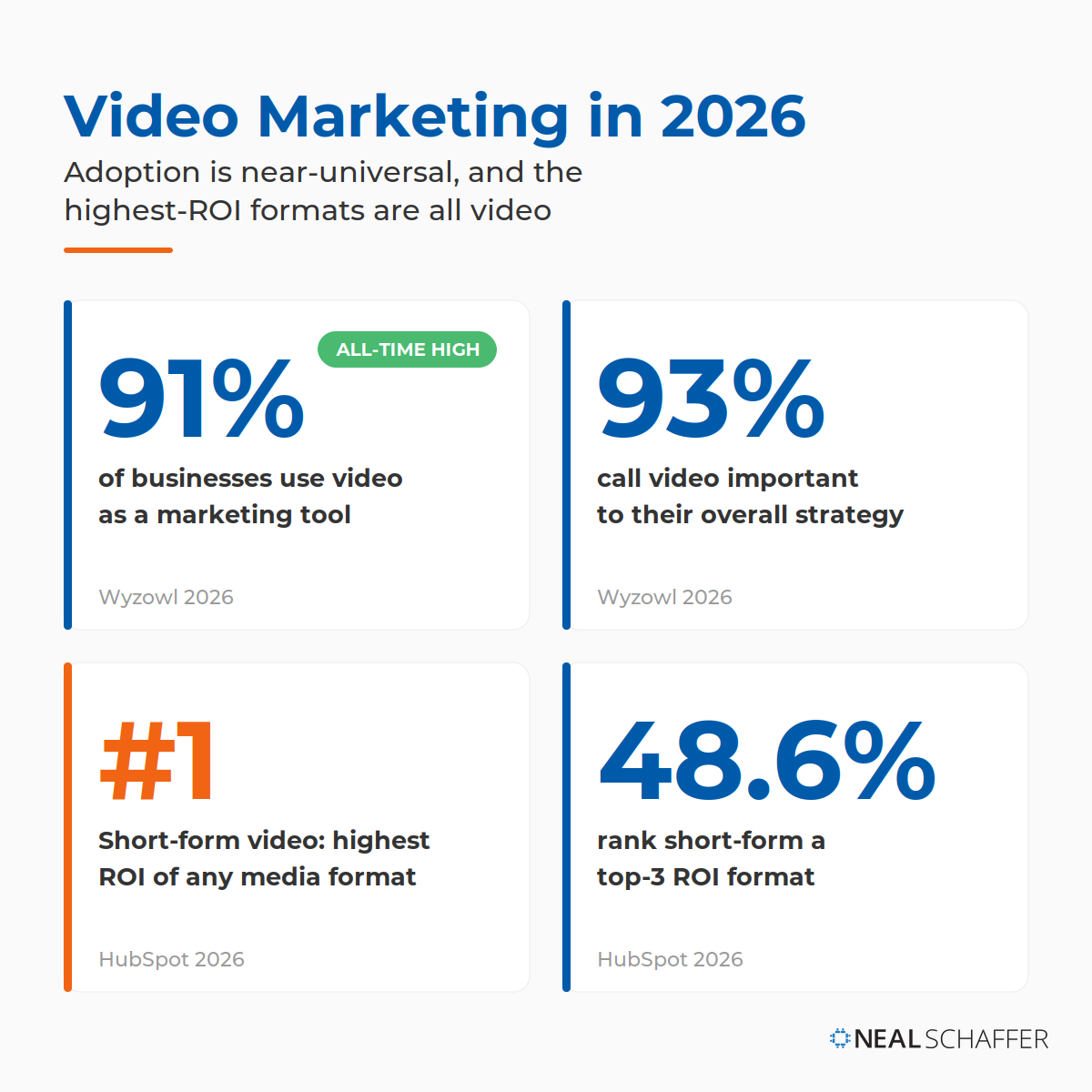
Video marketing in 2026. Sources: Wyzowl 2026, HubSpot 2026. 02
Email
For anyone who wants an audience the algorithm cannot revoke. Stand up one list and one weekly send. Capture email on the site, in the founder posts and after every call. Write from the same Brand DNA as your ads. One primary offer per email. One clear link. Success signal: clicks into a page, reply rate and meetings booked from the list. Opens are secondary.
03
AI search and SEO
For companies whose buyers ask search engines or AI tools who to trust before they buy. Lock Brand DNA first so the pages, the model answers and the ads agree.
Guide IQ is how I get founders that brief without a six-week strategy project: answer the questions, get the brand and go-to-market strategy, then publish pages that match it.
Publish a small set of pages that answer the questions your buyer actually asks: who it is for, what it replaces, proof, pricing story and how to start. Put those claims on your site in plain language. Refresh monthly with real customer language from calls. Success signal: organic visits to those pages, branded search and inbound that cites a page or an AI answer. Vanity keyword ranks without leads are noise.
04
One paid lane
For teams ready to buy learning speed once organic has surfaced a few hooks. Pick Meta or search. Wire the pixel. Write ten ads from the winning organic hooks (or three search themes if you chose Google). Point every ad at one landing page that matches the promise. Cap the first week so you can read results without panic. Success signal: cost per qualified lead or cost per booked call you would take again. If you cannot name the hook, offer, pixel and landing page in one breath, do not raise spend.
05
Partnerships or niche creators
For founders who can borrow a trusting audience faster than they can grow their own from zero. List ten partners or niche creators whose audience matches your buyer. Send a specific ask: a co-hosted session, a guest note, a product trial with a brief or a paid post with a clear offer. Prefer small niches with high trust over big accounts with cold reach. Success signal: at least one live distribution event this month that produces named conversations. A polite maybe with no date is not a partnership yet.
09
Meta in 2026
eMarketer's April 2026 forecast put Meta at $243.46 billion in net worldwide ad revenue for 2026, ahead of Google at $239.54 billion (Reuters coverage). That would be the first year Meta leads. Meta's share of global ad spend is forecast at 26.8%, Google at 26.4%. Amazon is third. Google, Meta and Amazon together are about 62.3% of global digital ad spend.
That is why Meta is the best paid channel for most teams to learn and scale on right now. It has the biggest ad machine and the strongest algorithmic delivery. Your job is to feed the system winning ads. Strong hooks, offers, angles and formats matter more than complicated audience stacks.
Use Meta to scale proven creative. Organic should surface the hooks first. Paid should amplify the winners. Go broader, simplify the account and stop building targeting origami while the ads are weak.
10
Keys to paid success
11
What you should do today
This is the climax of the guide. Do it in one sitting. Write it down. If a line is blank, that is the work. The order mirrors the thesis: market and differentiator first, then reach, then playbooks, then campaigns and budget.
01
Choose your target market
Demo plus psychographic. One sentence.
02
Define your UVP and core value story
What they get, why you, why now.
03
Map the GTM to PMF path
Who you sell to, how you get them, how you monetize.
04
Pick 3 acquisition channels
Example: paid search, founder content, partnerships. Only channels where your market actually shows up.
05
Pick 5 playbooks
Example: SEO, paid, UGC, founder content, partnerships. Or use the default five above. Size to budget and team.
06
Design 3 concrete campaigns
One for each channel or funnel stage. Offer, asset, date, success number.
07
Build a realistic budget for those 3 campaigns
Time, spend, tools. If the budget is imaginary, the test is imaginary.
When the page is filled, put the first campaign live this week. That is how a distribution engine starts.
12
How you know it is working
A channel is working when you can describe the loop: what you publish or spend, who it reaches, what they do next and how that turns into a customer you can name. Followers, impressions and raw traffic are inputs. The output is conversations, trials, sales or pipeline you can inspect.
Give a test enough creative density to learn, then kill it. Ten weak ads taught you nothing. Three strong angles, each with a real hook, will tell you more than a month of posting for consistency. Organic and paid should inform each other. A campaign with a date and a success number beats a vague plan to "do more content."
13
Why this matters now
Creation got cheap for everyone at once. The founders who win treat distribution as a company system: market, differentiation, reach map, playbooks, tools, campaigns and a kill loop. That system is hard to copy. Another feature ship is easy to copy. Running organic alone or ads alone leaves the learning incomplete. Campaign-based marketing is how you turn attention into customers you can name.
It is a founder's job to own distribution while the company is still small enough that nobody else will. Name the market. Lock the story. Map where buyers actually live. Run three campaigns. Kill what fails. Scale what converts. Capital still matters. The excuse that marketing is someone else's later problem does not.
If you want the brand and go-to-market brief those campaigns should read from, run the company through Guide IQ. Answer the questions, lock the strategy, deploy it to your agents and scale spend only after the story is fixed. If you want the weekly operator version of this, that is Systems Over Hustle.